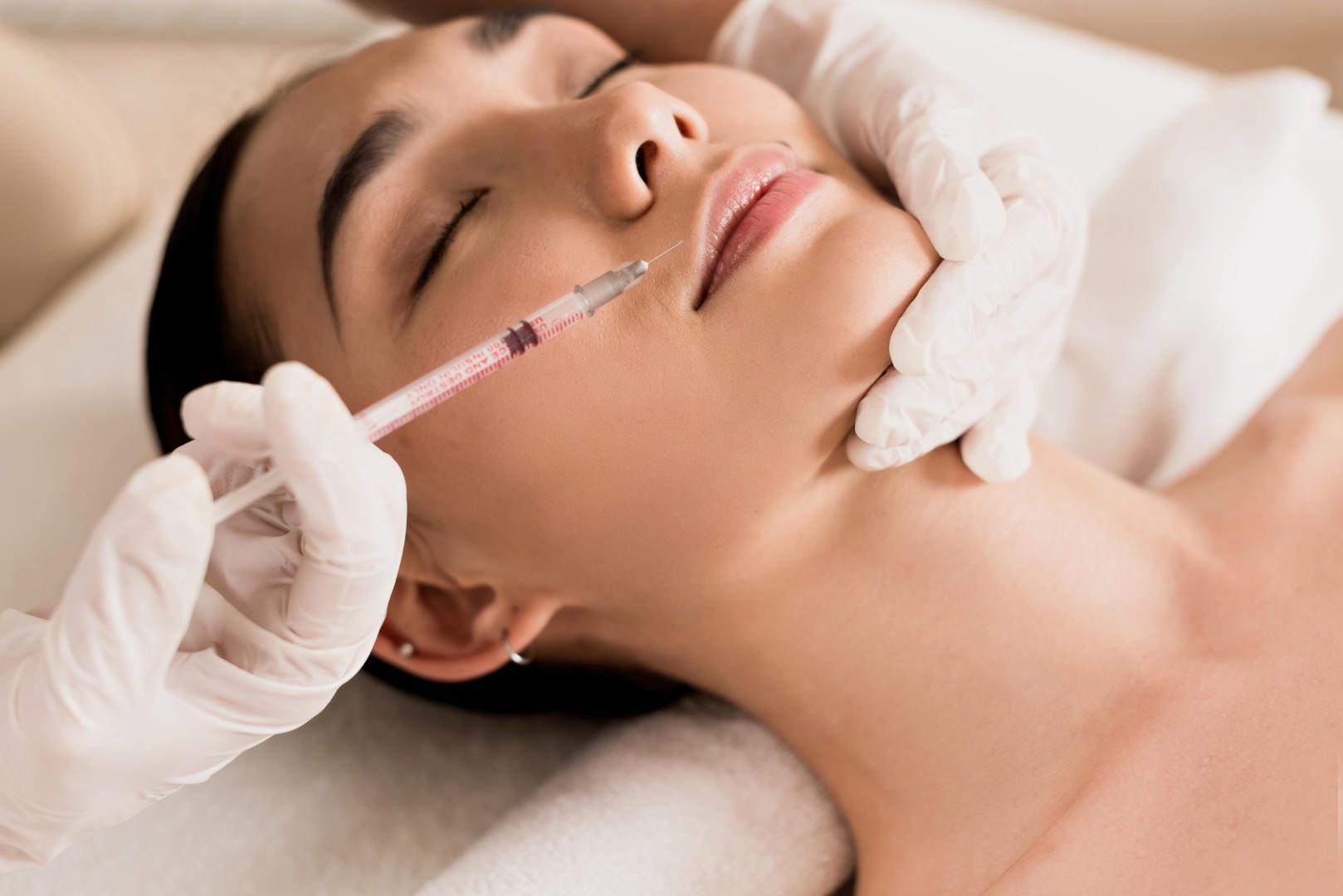
What is Botox?
Botox, the most common brand name for a type of botulinum toxin, is renowned for its ability to smooth dynamic wrinkles the wrinkles that are created due to facial expressions. Botox injections temporarily relax the facial muscles responsible for creating wrinkles such as crow's feet, forehead lines, and frown lines. By blocking nerve signals in the muscles where it's injected, Botox diminishes the appearance of these wrinkles, resulting in a smoother, more refreshed facial appearance.
Its precise application ensures that the natural movement of the surrounding facial muscles is maintained, preserving your natural expressions while reducing unwanted lines. Moreover, the treatment's ability to target specific muscles means it can be tailored to your unique facial structure, ensuring results that complement your natural features.
Botox's benefits extend beyond just smoothing dynamic wrinkles. It has versatile applications in treating a range of issues for instance, it's used in the medical field to treat conditions like chronic migraines and excessive sweating.
Top uses for Botox
- Crow's feet
- Forehead lines
- Glabellar lines ("elevens")
- Bunny lines (lines around the nose)
- Jawline slimming
- Platysmal banding (vertical neck bands)
Side effects and considerations
While Botox treatments have an excellent safety record, like any procedure, they carry the potential for side effects. Common side effects can include temporary bruising, swelling at the injection site and mild discomfort. More rare complications might involve asymmetry or muscle weakness. These effects are typically short-lived and can be minimized by choosing a qualified and experienced practitioner such as a board-certified dermatologist, plastic surgeon or licensed aesthetician.
Other brands
It's worth noting that the term "Botox" is a brand name often used as shorthand for the entire class of injectable neuromodulators. Other FDA-approved brands include Daxxify, Dysport, Jeaveau and Xeomin, each containing a slightly different formulation of the botulinum toxin and thus yielding subtly different outcomes.
Exploring Dermal Fillers
Dermal fillers are another key option for enhancing facial contours and diminishing signs of aging. Containing ingredients like hyaluronic acid, calcium hydroxylapatite, poly-l-lactic acid and sometimes collagen, soft tissue fillers rejuvenate your facial appearance through a different mechanism than Botox.
While Botox relaxes tense muscles that age your appearance, filler injections literally "fill" in areas beneath the skin, adding volume and smoothing out static wrinkles. This makes them particularly effective in areas prone to volume loss, such as the jawline, under-eye areas and nasolabial folds. They can plump thin lips, enhance shallow contours, soften facial creases and improve the appearance of recessed scars.
Top uses for fillers
- Cheek enhancement
- Lip enhancement
- Jawline contouring
- Correcting under eye hollows
Popular dermal fillers
The world of injectable fillers is diverse, with multiple FDA-approved brand names and types available, each suited to different needs.
- Juvederm products are hyaluronic acid fillers suitable for various areas of the face. They're used for plumping lips, enhancing cheeks and contouring the jawline.
- Restylane fillers also contain hyaluronic acid and have multiple uses, including treating smile lines and nasolabial folds, and rejuvenating the backs of the hands.
- Revance RHA fillers contain a more resilient form of hyaluronic acid that's meant to be more flexible, allowing natural-looking expressions.
- Belotero, another hyaluronic acid filler, is recognized for its ability to integrate into facial skin tissue seamlessly.
- Radiesse contains calcium hydroxylapatite and is known for its longer-lasting results in areas like nasolabial folds.
- Sculptra is another long-lasting filler containing poly-L-lactic acid, which works to gradually build collagen over time rather than providing immediate volume.
Generally, hyaluronic acid fillers like Juvederm and Restylane can last from 6 months to over a year, while Radiesse and Sculptra, being more robust, might last up to two years or more. The choice of filler will depend on factors such as the desired area of enhancement, the depth of wrinkles or folds and the results you're aiming for.
Safety and side effects
All of the fillers widely used in medical spa settings are FDA-approved and have a strong safety profile when administered by a skilled and experienced injector. Hyaluronic acid fillers in particular are rarely associated with adverse effects. However, like any cosmetic procedure, there are risks involved. Possible side effects range from mild (like redness, swelling, and bruising at the injection site) to more serious but rare complications, such as allergic reactions or asymmetry.
Choosing the Right Treatment
Selecting the most appropriate treatment Botox or fillers hinges on your individual skin care needs and the signs of aging you wish to address. This decision is not one-size-fits-all and should be made in consultation with a dermatologist or plastic surgeon. These professionals can assess your skin's condition, discuss your aesthetic goals, and recommend the most suitable treatment. They will consider factors like the areas of your face you want to treat, the results you hope to achieve, the cost and the potential side effects of each option.
Treatment areas and specific goals
Undoubtedly, the most important element when considering Botox and dermal fillers is knowing which areas of your face you want to treat.
Botox is most effective in reducing the appearance of dynamic wrinkles, which are caused by muscle movement. This makes it ideal for treating forehead lines, crow's feet around the eyes and frown lines between the eyebrows in short, the upper part of the face.
In contrast, dermal fillers are excellent for addressing static wrinkles, which are visible even when your face is at rest. Fillers are commonly used to add volume and smooth out creases in areas like the nasolabial folds, marionette lines and to enhance the jawline and under-eye area. With a few exceptions, that means fillers are usually used in the mid to lower regions of the face.
Downtime and Recovery
Understanding the downtime and recovery associated with Botox and fillers is key to planning your treatment. Botox typically involves minimal to no downtime. Most people can return to their normal activities immediately after the procedure.
On the other hand, dermal fillers might require a slightly longer recovery period. While you can usually return to most activities right away, you might experience more noticeable swelling or bruising that can last for a few days to a week, depending on the treated area and the type of filler used. It's important to follow your dermatologist's aftercare instructions to ensure optimal healing and results.
Cost Considerations
In comparing the costs of Botox and dermal fillers, it's all about balancing your immediate budget with long-term expectations. Botox is more affordable per session, with prices ranging from $10 to $20 per unit. A typical treatment, like targeting forehead lines, might use 10–20 units, setting you back about $100 to $400.
On the flip side, fillers cost more upfront you may be looking at $600 to $1,000 per syringe. But here's the upside: filler treatments generally last longer, from 6 months up to a year or more, unlike Botox, which requires follow-up treatments every 3–4 months.
So, when you're deciding between the two, consider not just the initial cost but also how often you're ready to return for maintenance. Fillers could be a more economical choice in the long run, despite their higher initial cost, especially if you're aiming for lasting results with fewer visits.
Combining Fillers and Botox
Many times, the best approach to facial rejuvenation involves a combination of Botox and fillers. This approach allows for a comprehensive treatment that addresses various signs of aging. For instance, while Botox can relax the muscles causing forehead wrinkles, fillers can be used to restore volume to hollow areas like the cheeks or under eye area.
This synergistic approach can create a more balanced, rejuvenated appearance, with Botox reducing the movement that forms certain wrinkles and fillers providing volume and smoothing out static lines.
Addressing Misconceptions
Thanks to photos of celebrities with outrageously plump lips or expressionless eyebrows, many people believe that Botox and fillers always translate to an unnatural-looking appearance. However, this doesn't have to be the case.
When administered correctly by a qualified professional, Botox temporarily relaxes muscles to soften wrinkles while maintaining natural facial expressions. Similarly, fillers do not always mean an overly "plumped" look. Today's fillers are designed to provide natural-looking volume and contouring.
Another misconception is that these treatments are only for older individuals. In reality, people of various ages seek Botox and fillers for different reasons, including preventative anti-aging measures.
Lastly, the fear of looking dramatically different is often unfounded. Experienced practitioners aim to enhance your natural features, not change them entirely. By choosing a qualified dermatologist or plastic surgeon, you can ensure a safe procedure with results that align with your aesthetic goals.
Frequently Asked Questions
-
Botox relaxes the muscles that cause dynamic wrinkles formed by facial expressions, while dermal fillers add volume beneath the skin to smooth static wrinkles and restore lost fullness in areas like the cheeks, lips, and jawline.
-
Botox results typically last 3–4 months, requiring regular follow-up treatments to maintain results. Dermal fillers generally last longer — hyaluronic acid fillers from 6 months to over a year, while options like Radiesse and Sculptra can last up to two years or more.
-
Yes, combining Botox and fillers is a common and effective approach. Botox addresses dynamic wrinkles in the upper face while fillers restore volume and smooth static lines in the mid to lower face, creating a more comprehensive and balanced rejuvenation.
-
When administered correctly by a qualified professional, neither Botox nor fillers should result in an unnatural appearance. Experienced practitioners aim to enhance your natural features, not change them entirely, delivering subtle and natural-looking results.
-
No, people of various ages seek Botox and fillers for different reasons, including preventative anti-aging measures. A consultation with a qualified provider will help determine whether treatment is appropriate for your age and skin condition.
-
Botox is more affordable per session, typically costing $100 to $400 for a standard treatment area. Fillers cost more upfront at $600 to $1,000 per syringe, but their longer-lasting results mean fewer visits over time, which can make them more cost-effective in the long run.
Ready to Enhance
Your Natural Beauty?
Botox and dermal fillers are both excellent options for facial rejuvenation, each with their own unique benefits. Consulting with a board-certified dermatologist or skin care expert is the best way to receive personalised advice tailored to your specific needs. Contact SkinOvation today to schedule a consultation and take the first step toward achieving your aesthetic goals.
Book a Free Consultation →